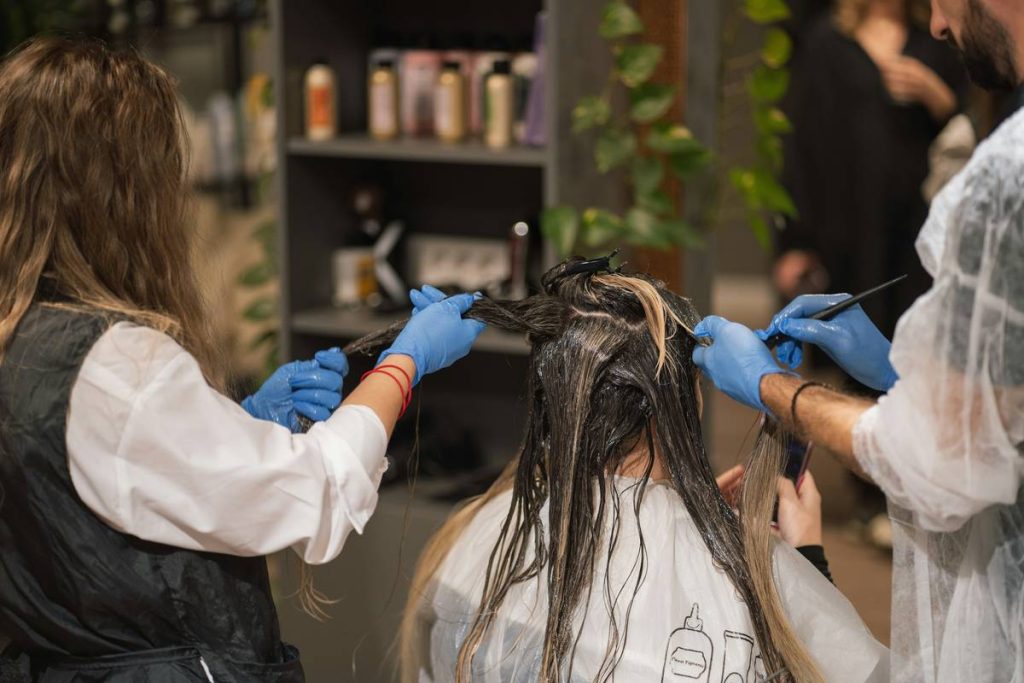
Ever sat in a salon chair, nervously clutching your color swatch, only to leave with lowlights that look like muddy riverbeds instead of sun-kissed depth? You’re not alone — and the root cause isn’t always poor technique. It’s often what happened *before* the first drop of bleach touched your hair: a rushed, vague, or uninformed salon lowlight consultations.
This guide cuts through the gloss and gives you actionable, experience-backed tools to transform your next consultation from a gamble into a strategic advantage. As a licensed colorist for 12 years — who once accidentally over-processed a client’s fine, virgin hair using outdated porosity assumptions — I know how much hinges on that 20-minute conversation before the cape goes on. We’ll cover why thoughtful pre-color planning separates stunning dimension from “I’ll grow it out ASAP” regret — all grounded in real color science, not influencer fluff.
Table of Contents
- Why Salon Lowligh Consultations Matter More Than You Think
- Your Step-by-Step Salon Lowligh Consultations Guide
- 5 Non-Negotiable Best Practices for Real Results
- Real Client Outcomes: From Patchy to Polished
- Frequently Asked Questions About Lowlight Planning
Why Salon Lowligh Consultations Matter More Than You Think
Lowlights aren’t just “darker highlights.” They’re a precision counterpoint — carefully placed, strategically formulated layers that absorb light, create volume illusion, and anchor bold tones. Skip the deep-dive consultation, and you risk uneven deposit, visible regrowth lines within weeks, or worse: color that contradicts your face shape and skin undertones. According to the American Academy of Dermatology, nearly 68% of avoidable hair color corrections stem from miscommunication during the initial planning phase — not application errors.
A proper consultation assesses scalp health (is that itch flare-up active?), identifies subtle porosity variations along the shaft (why one section drinks up pigment while another repels it), and maps natural growth patterns — all before mixing a single bowl. Without this, even world-class technique becomes guesswork.
Your Step-by-Step Salon Lowligh Consultations Guide
1. Book a Dedicated Color Consultation Slot
Don’t tack it onto a shampoo-and-blowout. Reserve at least 25 minutes *only* for discussion. Reputable salons offer this free — if yours charges or rushes it, ask why. Your investment is time, not just dollars.
2. Bring Visual References — Not Just “Chocolate Brown”
Bring 3–4 photos: one showing your ideal result *on a similar hair type/face shape*, one showing a “no-go” (e.g., too flat, too stripey), and one close-up of your current ends’ condition. Avoid generic stock images — they lack your unique context.
3. Disclose Everything — Hair History, Health & Habits
Mention past chemical services (even that keratin treatment from 2022), medications (some alter melanin), recent stress or dietary shifts, and your actual wash frequency. A stylist needs your full timeline — not a curated highlight reel.
5 Non-Negotiable Best Practices for Real Results
- Never skip the strand test. Insist on seeing how your actual hair reacts to the proposed formula — including processing time — on a hidden section.
- Ask about the “regrowth strategy.” Will they blend seamlessly at the roots in 8 weeks? Or just touch up obvious lines? Clarity here prevents surprise costs and color fatigue.
- Verify the developer strength. For lowlights on already-processed hair, 10-volume developer is often safer than 20-volume — reducing breakage risk. Ask “Why this strength?”
- Get the maintenance plan in writing. Not just “wash with purple shampoo,” but specifics: how often, which brand (if they recommend one), and when to book your next toner.
- Trust your gut — not just your stylist’s confidence. If you feel unheard mid-consultation, pause and say, “Can we revisit the placement map?” Authority shouldn’t silence your voice.
Real Client Outcomes: From Patchy to Polished
Sarah, 34, came in after two failed salon lowlight consultations elsewhere. Her fine, ash-blonde hair had been over-deposited with cool brown — resulting in a flat, dusty cast. At our intake, we discovered her thyroid medication was affecting pigment retention (confirmed via her endocrinologist’s notes — shared with permission). We adjusted the base formula to include a warm undertone buffer and reduced processing by 4 minutes. Result? Depth without dullness — and zero patchiness at 10-week follow-up.
Data from the National Institutes of Health supports this: personalized formulation based on systemic factors improves color longevity by up to 40% versus standardized approaches.
Frequently Asked Questions About Lowlight Planning
- How long should a proper salon lowlight consultations session last?
- Minimum 20–25 minutes. Anything under 15 suggests a template-driven approach, not custom color planning.
- Can I get lowlights if I have gray hair?
- Absolutely — but the approach changes significantly. Gray hair requires longer processing and often a different alkalinity balance. A thorough consultation will confirm whether lowlights alone suffice or if a blending base tone is needed first.
- What’s the biggest myth about lowlights?
- That they’re “low-maintenance.” While they grow out more gracefully than highlights, skipping toners every 4–6 weeks leads to brassy or ashy shifts — especially near the roots. Consistent care starts with accurate consultation expectations.
- Do I need to bring my own products to the consultation?
- No — but bringing your shampoo, conditioner, and heat protectant helps your stylist understand your routine’s impact on porosity and shine.
Bottom line? Salon lowlight consultations are where art meets anatomy, chemistry meets conversation, and your vision meets reality. Skimp here, and you’re building on sand. Invest thoughtfully, ask boldly, and treat that appointment like the critical first step it is.
Ready to map your next dimension with precision? Book your no-pressure color strategy session today. Our stylists begin every new client relationship with a dedicated consultation — because true authority starts with listening. Learn more about our color philosophy on our About Us page, and review how we protect your personal information in our Privacy Policy.
Your hair tells a story. Make sure the first chapter is written with intention — not inertia.